High Speed Patrol Boat Trials: 7 Mistakes You’re Making with Performance Verification (And How to Fix Them)
Performance verification for high-speed patrol boats often represents a point of friction between shipyard delivery teams and procurement officers. In the controlled environment of a sea trial, a 15-metre aluminium vessel might achieve its design speed of 45 knots with ease. However, six months into operational deployment in the Arabian Gulf, that same vessel may struggle to reach 38 knots. This discrepancy is rarely the result of a single mechanical failure; rather, it stems from a failure to account for real-world variables during the initial verification process. At Arabian Marine Company, the data we see from trials conducted at RAK Maritime City suggests that the gap between theoretical performance and operational reality is widening as hull designs become more specialised.
1. The Displacement Fallacy: Trials at Minimum Load
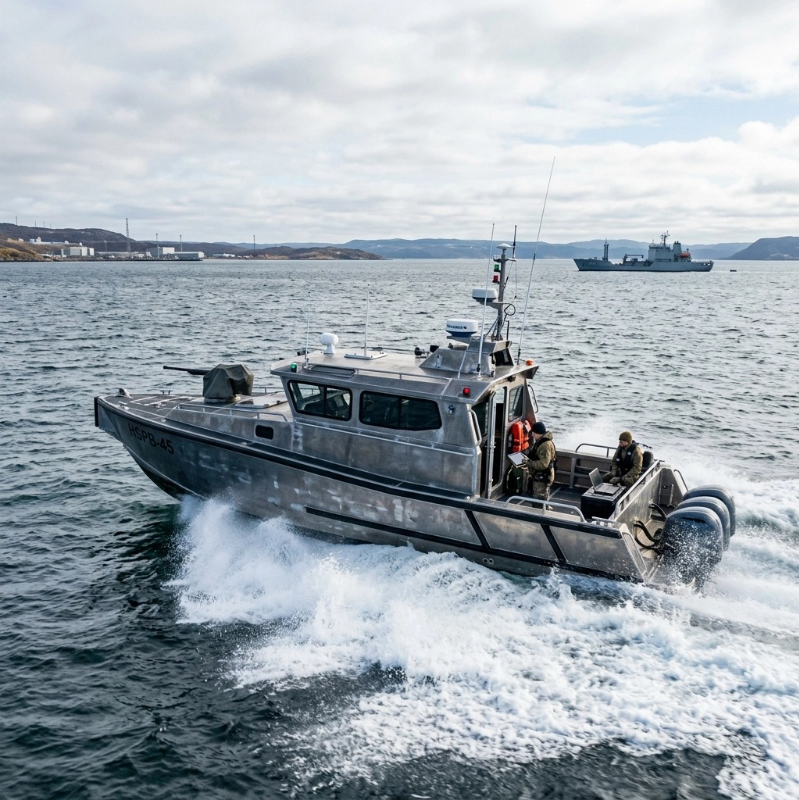
The most frequent error in performance verification is conducting speed trials at ‘lightship’ or minimum displacement. It is common for shipyards to run trials with 10% fuel, no fresh water and only two technicians on board. While this produces an impressive top-speed figure for a brochure, it is irrelevant to a naval architect or a fleet manager. In our experience, a patrol boat designed for a 12-hour mission profile will carry significantly more weight in the field than it does during a manufacturer’s trial. This includes full fuel tanks, ammunition, body armour, cooling systems and a full crew of six to eight personnel. The trade-off is clear: by testing at minimum load, you gain a high speed figure but lose the ability to verify if the propulsion system is correctly pitched for a fully laden vessel. When that vessel is later loaded to its maximum displacement, the engines may fail to reach their rated RPM, leading to increased thermal stress and reduced engine life.
2. Ignoring the GCC Ambient Temperature Gap
Marine engines are typically rated according to ISO 3046-1 standards, which assume an ambient air temperature of 25°C and a sea water temperature of 25°C. In the Arabian Gulf, these conditions are non-existent for much of the year. During summer months, ambient air temperatures at RAK Maritime City regularly exceed 45°C, while sea water temperatures can reach 35°C. The data we see indicates that high-speed diesel engines can suffer a power de-rating of 5% to 10% in these conditions. If performance verification is conducted in the cooler months of January or February, the results will not be replicable in July. Buyers must insist on performance corrections that account for local humidity and temperature. Failing to do so means procurement officers are buying a vessel that technically meets the specification on paper but will underperform during the most demanding operational months.
3. Over-Reliance on GPS Speed Over Ground (SOG)
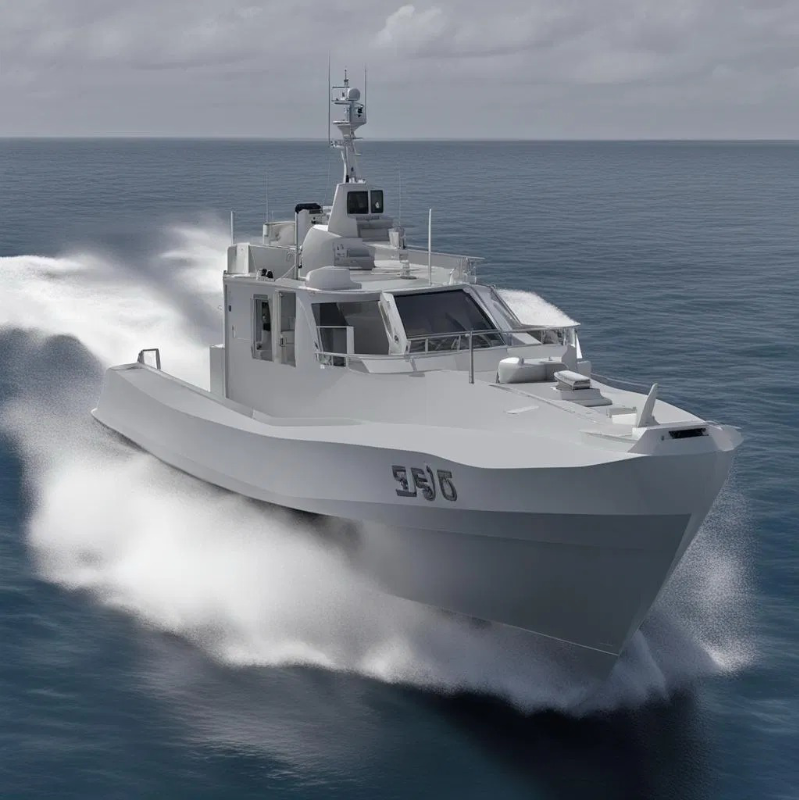
Many trials rely solely on GPS SOG data to verify speed. While GPS is highly accurate for navigation, it does not account for tidal flow or surface currents. A 2-knot following current can make a 38-knot boat appear to be a 40-knot boat. To fix this, verification must involve “reciprocal runs”: testing the vessel on a specific course and then immediately repeating the run in the opposite direction. The average of these two runs provides a more accurate representation of the vessel’s true performance. Furthermore, at high speeds, the aerodynamic drag of the superstructure becomes a factor. In our experience, testing with a 15-knot headwind versus a 15-knot tailwind can result in a 3-knot variance in top speed for an aluminium patrol craft with a high profile.
4. The Impact of Rapid Biofouling in Warm Waters
In the nutrient-rich, warm waters of the Gulf, biofouling occurs with remarkable speed. Even a thin layer of slime or “micro-fouling” on an aluminium hull can increase drag by as much as 15%. We have seen instances where a vessel sat in the water at a quay for only 72 hours prior to a trial, resulting in a measurable drop in performance compared to its first launch. For accurate verification, the hull must be “mechanically clean.” If the vessel has been in the water for more than a few days, it should be hauled out and pressure washed before the trial. The trade-off here is the cost and time of an additional lift, but without it, the baseline data for the vessel’s lifecycle performance is fundamentally flawed. This is a critical consideration for repair and refit schedules as
well.
5. Miscalculating the Trade-off Between Sprint Speed and Range
Procurement specifications often demand a high top-end “sprint” speed. However, the hull forms re quired to achieve 50 knots often perform poorly at the lower speeds (10–15 knots) required for loitering or patrolling. A hull with a deep-V section designed for high-speed stability will have a higher wetted surface area, increasing drag at lower speeds and reducing the vessel’s total range. The mistake in verification is only testing the extremes: the slowest idle and the fastest sprint. To understand the operational utility of the boat, the trial must include a full fuel consumption curve across the entire RPM range. This allows naval architects to identify the “sweet spot” for fuel economy. In our experience, many high-speed patrol boats are delivered with a range that is 20% lower than predicted because the sea trials focused only on the glamour of the top speed rather than the reality of the cruise speed.
6. Neglecting Dynamic Stability at High Speed
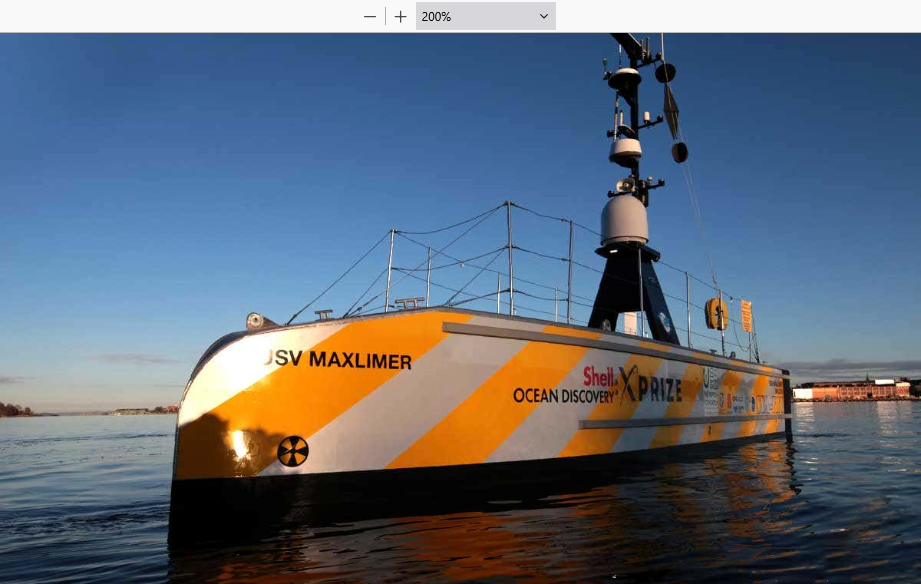
Speed is only useful if the vessel remains a stable platform for the crew. During trials, there is a tendency to run in a straight line on calm water. However, aluminium patrol boats are prone to dynamic instabilities such as “chine walking” or “bow steering” when pushed to their limits in a sea state. Verification must include high-speed manoeuvring tests, including the “Z-drive” or “S-turn” manoeuvres at 80% and 100% throttle. We have seen vessels that can reach 45 knots in a straight line but become dangerously unstable if a sudden course correction is required. The trade-off for a very narrow, high-speed hull is often a reduction in lateral stability. Buyers should consult advisory and consulting services to ensure their stability criteria are as rigorous as their speed criteria.
7. Failure to Verify Specific Fuel Consumption (SFC)
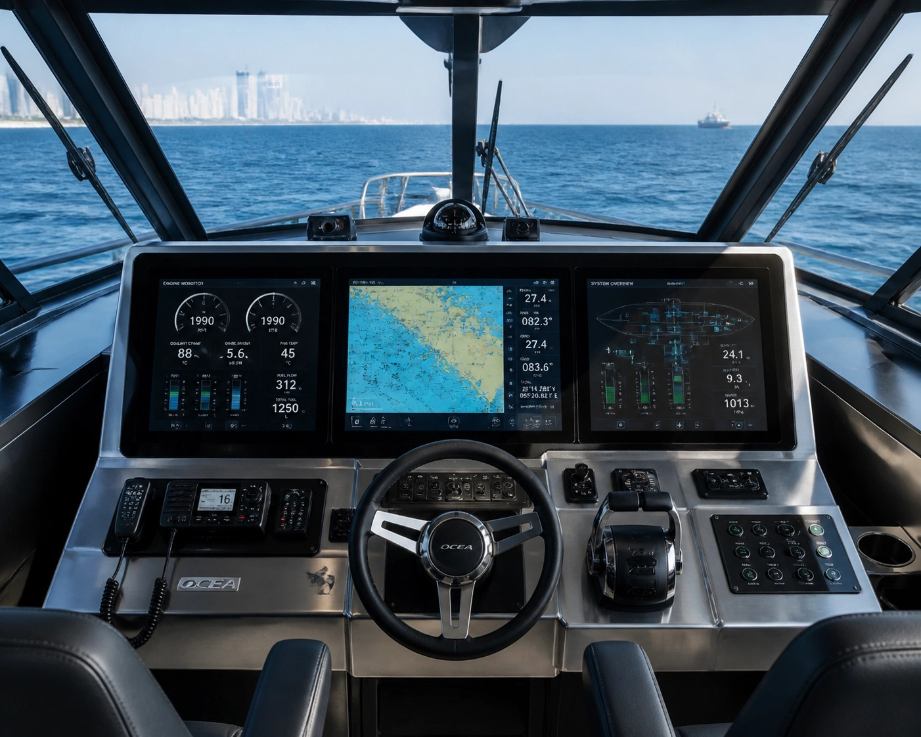
The final mistake is failing to verify the engine’s fuel burn against the manufacturer’s stated SFC curves. While the engine display might show a fuel burn rate, this is an estimate based on fuel mapping, not a direct measurement. For maritime authorities managing large fleets, a 5% error in fuel burn data across 20 vessels represents a significant budgetary oversight. Proper verification requires the use of calibrated flow meters during the sea trial. This data allows for the creation of an accurate mission-planning tool for the crew. Without calibrated data, the “low fuel” alarm becomes the primary method of range management, which is an unacceptable risk for offshore operations.
What this means for buyers
For procurement officers and naval architects, the goal of performance verification should not be to see if the boat can “hit the number” once. The goal is to establish a performance baseline that the vessel can maintain for the next ten years.
When evaluating a new aluminium patrol boat, insist on the following:
- A “Mission Profile” Loadout: Conduct trials at 50% fuel and 50% payload as a minimum, but also include a “Max Displacement” test to ensure the propulsion system is not over-propped.
- Temperature Corrections: Demand that all data be corrected to local GCC environmental conditions (45°C Air / 35°C Water).
- Comprehensive Data Logging: Move beyond simple SOG. Log fuel flow, exhaust gas temperatures (EGT), and engine load percentages.
- Stability Verification: Perform full-speed tactical turns to ensure the hull remains predictable.
By shifting the focus from “top speed” to “mission-ready performance,” you reduce the likelihood of costly mid-life refits and ensure that the vessel is fit for the aluminium market standards of the region.
The Inherent Trade-off
Every design decision in marine manufacturing involves a compromise. A boat designed for maximum speed will inevitably sacrifice some degree of fuel efficiency at low speeds. A boat built with heavy armour for security will have a higher centre of gravity, impacting its high-speed cornering ability. At Arabian Marine Company, we believe it is better to acknowledge these trade-offs during the verification phase than to discover them during an operational emergency. Accurate data is the only tool that allows a fleet manager to balance these competing requirements effectively.
Arabian Marine Company builds aluminium vessels under 20m at RAK Maritime City. Capability sheet at arabianmarine.com/library.